COMMENTARIES
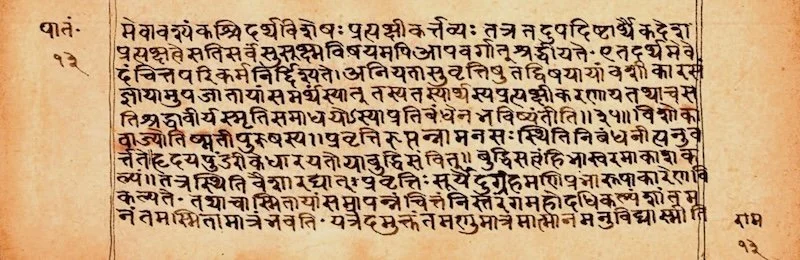
The Yoga Sutra is extremely condensed.
The words of the Sutras often assume an enormous amount of background knowledge.
This is why traditional commentary is essential.
Without commentary, it is easy to read our own ideas into the text.
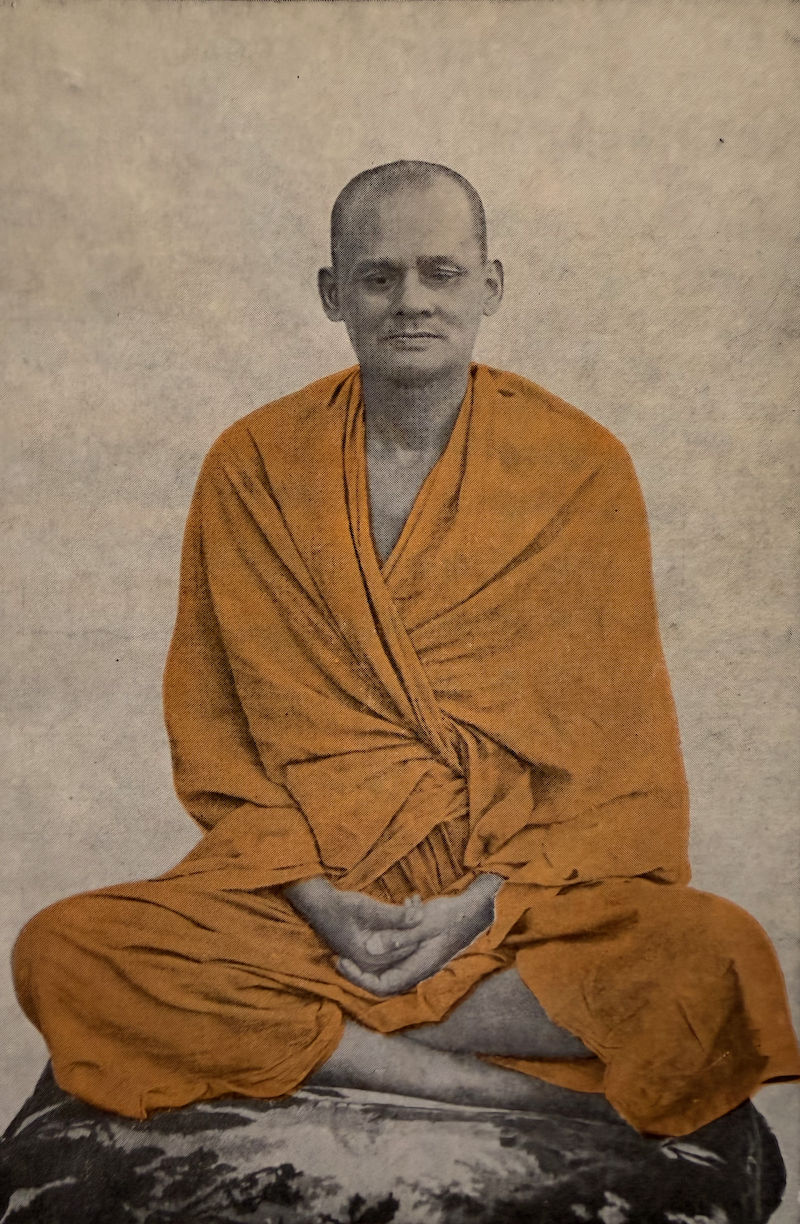
IMAGE: Hariharananda Aranya portrait — 35% width
VYASA
The commentary attributed to Vyasa is the foundational commentary on the Yoga Sutra.
It became the basis for much of the subsequent commentarial tradition.
We study the Sutras together with Vyasa’s explanations, following the development of the ideas rather than treating each Sutra as an isolated statement.
THE COMMENTARIAL TRADITION
The traditional commentaries provide the context that allows the condensed language of the Sutras to be understood.
They explain terms, distinguish subtle concepts, give examples and connect individual Sutras with the larger teaching.
The commentary is therefore not an optional supplement.
It is part of the traditional method of studying the text.
HARIHARANANDA ARANYA
Hariharananda Aranya’s commentary has played an important role in my own study of the Yoga Sutra.
His presentation brings together close textual study, philosophical analysis and practical investigation.
It provides a particularly useful bridge between the words of the text and the experience to which they point.
UNPACKING THE SUTRA
The work of commentary is to unpack.
A short Sutra can contain a complete teaching.
We slow it down.
We examine the words.
We look at the traditional explanation.
We consider the relationship to other Sutras and other texts.
And then we ask what this understanding means in practice.
EXTRACTING THE JUICE
The aim is not simply to read more.
It is to understand more deeply.
To extract the juice from the text.
To see what remains when the words have been understood and the teaching becomes something that can be investigated directly.